

Blog
10″ Self-Healing Cutting Mat Review: Right for Our Shop?

Ever tried trimming veneer edging, cutting sandpaper sheets, or slicing gasket material on the bench—only to watch your ruler creep, your knife dig into the tabletop, and your “rapid cut” turn into a precision problem? In small-shop woodworking, clean, repeatable cuts often come down to the humble cutting surface as much as the blade.
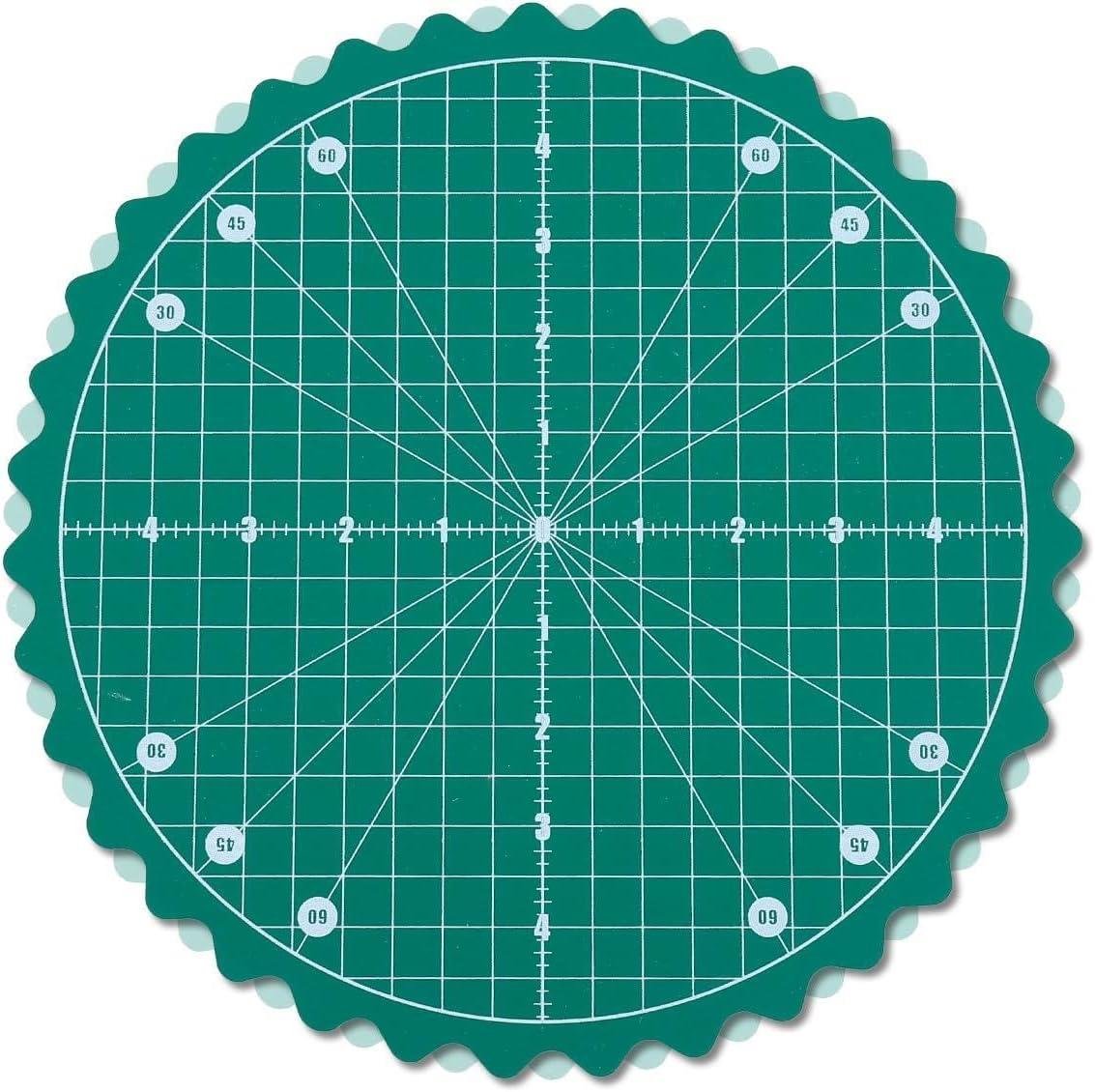
The ZAMQIU 10″ Self-Healing Cutting Mat is a compact,round mat designed for detail cutting with a non-slip sponge base,a scalloped edge for easy handling,and a deep-green,high-contrast grid with 30°,45°,and 60° angle lines. It’s marketed for sewing and craft work, but the size and markings can translate well to layout and trimming tasks we do in the shop.
In this review, we’ll look at build quality, readability, bench stability, and whether the “self-healing” and rotation-style design make sense for woodworkers working in tight spaces and on a budget. We’ll also weigh customer feedback—many reviewers like the sturdy surface and crisp markings, while several report the rotating action doesn’t work as advertised.
We’ve set up plenty of small jigs and templates over the years, and we certainly know the difference a reliable, accurate mat can make.
Tool Overview and Shop Ready Build Quality

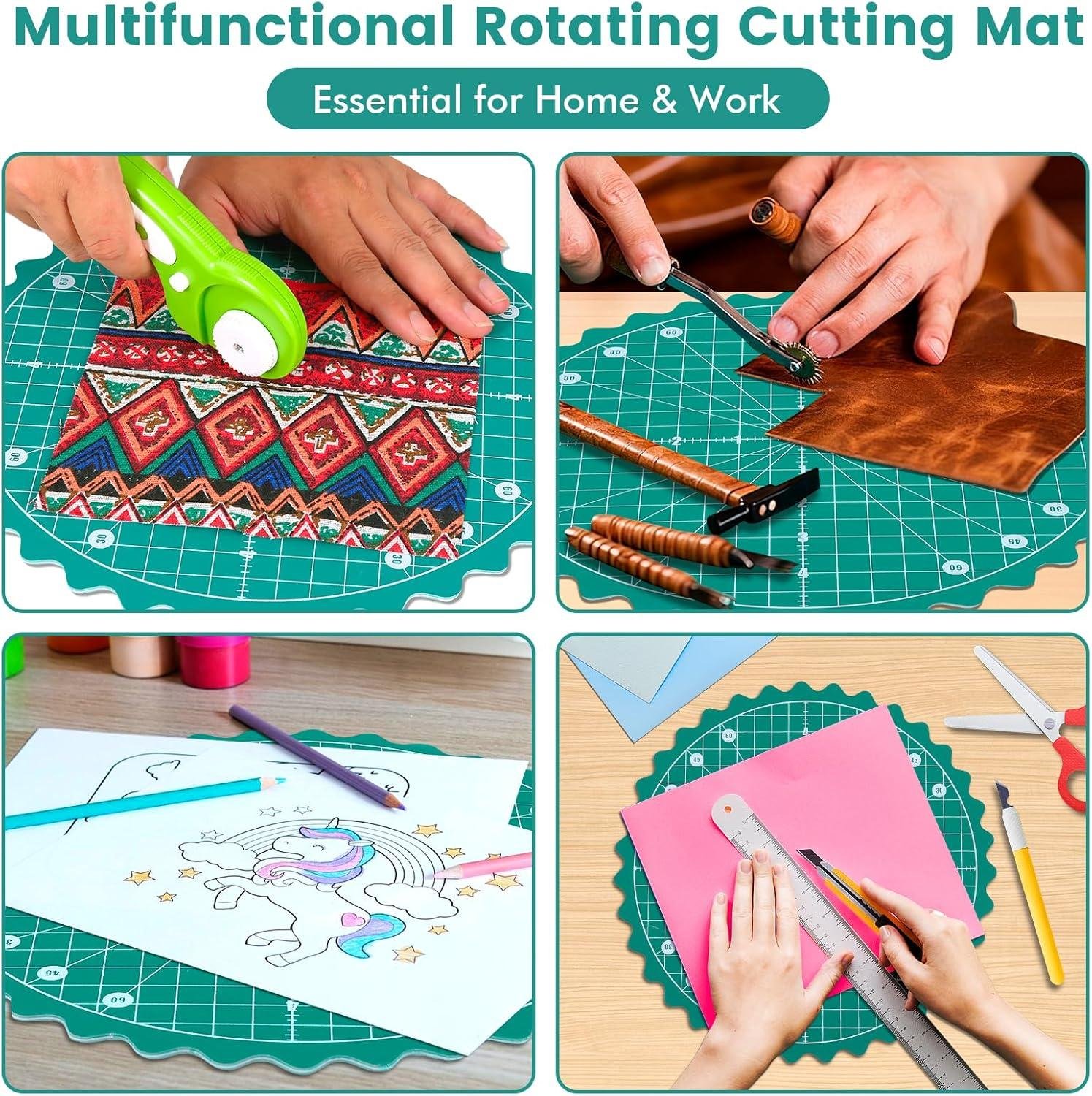
In our shop, a small cutting mat like this lands in the “bench-side helper” category—something we keep near the marking tools for quick, tidy knife work rather than heavy layout. The ZAMQIU mat is a 10-inch round, self-healing PVC cutting surface with a deep green face, white grid lines, and 30°/45°/60° angle guides, plus a scalloped edge meant to improve grip when repositioning. Even though it’s marketed for sewing and quilting, that printed angle geometry translates well to woodworking tasks like trimming sandpaper sheets, veneer edges, leather strops, cork/rubber gasket material, or cleaning up tape, shims, and template film with a sharp utility knife.The educational bit worth remembering: “self-healing” mats work by allowing the top layer to close back up after a cut, but they still need a little “rest” time—so in practice we get the best results by changing our cut locations and keeping blades sharp to avoid gouging.
On shop-ready build quality, the story from reviews is consistent: customers frequently describe the mat surface as “sturdy,” “smooth,” and resistant to showing knife marks, and several call out the markings as extremely useful for spacing and angled cuts—one even used it successfully for on-site graphics trimming and fitting. Where the product gets pushback is the base/rotation concept. Multiple reviewers report it “doesn’t rotate,” “binds,” or requires lifting an edge, and one measured the base at about 3mm thick and called it “a thin piece of plastic with an even thinner piece of foam”, noting the assembly can drag and move rather than stay truly non-slip. That matches the product’s own caution that this mat “cannot be rotated”—so we’d treat the “rotating” aspect as a bonus if it works on our bench, not a guaranteed feature. If we need a dependable turntable-style mat for repetitive angle cuts, we’d plan on using this as a stationary 10-inch cutter pad and rely on an actual rotating platform or simply rotate the workpiece.
- Included accessories: Cutting mat + base (as supplied; no blades or cutters listed)
- Compatible attachments/accessories: Utility knife,hobby knife (X-Acto style),rotary cutter,straightedge,small try-square,marking knife,scratch awl
- Ideal project types: Sandpaper and abrasive trimming,veneer/tape trimming,template film cuts,leather/cork/rubber small parts,shop labels and masking layouts
- Wood types tested by customers: Not specified in reviews (most user feedback focuses on fabric,paper,leather,and graphics materials)
| Spec / feature | What It Means in Our Shop |
|---|---|
| Size: 10″ round | Best for small parts and bench-side trimming; not a full layout surface for cabinet parts |
| Material: PVC self-healing surface | Helps reduce visible cut lines; rotate cut zones and let it “rest” for best recovery |
| Angle guides: 30° / 45° / 60° | Handy for quick angle references when cutting non-90° items (tape,veneer,templates) |
| Base: PVC+EVC anti-slip sponge (claimed) | Reviews are mixed—some say it “stays put,” others report sliding/dragging during use |
| Rotation feature | Customer theme: frequently enough binds/doesn’t rotate; product note warns it may not rotate |
| After-sales support: 1 year | Useful if you receive a base that won’t seat well or arrives defective |
| Accessory / Tool | Compatible? | Notes |
|---|---|---|
| Straightedge / metal ruler | Yes | Use for clean knife cuts; avoid pressing so hard you score through the mat layers |
| Utility knife / marking knife | Yes | Sharp blades reduce tearing and improve self-heal performance |
| Rotary cutter | Yes | Common with mats; keep pressure moderate and rotate cut locations |
| Bench hook / cutting board | sometimes | If the “non-slip” base drags,placing the mat on a thin router mat or drawer liner can definately help |
| Capacity Area | Recommended (Practical) | Actual (What to Expect) |
|---|---|---|
| Cutting area size | Small parts up to 10″ footprint | 10″ round mat limits long straight cuts (fine for trim work) |
| Rotation use | Only if you truly need a turntable mat | Expect to use it stationary; rotation is widely reported as stiff/binding |
See Full Specifications & Customer Photos
Real World Performance Under Knife and Chisel Work

In our shop, a 10″ round self-healing PVC cutting mat like this is less about replacing a bench hook and more about creating a “safe zone” for knife lines, veneer trimming, gasket/paper patterns, and inlay layout where we don’t want to scar the benchtop. the deep green surface with white grid lines and the built-in 30°, 45°, and 60° angle guides are legitimately handy when we’re trimming small template parts or slicing tape and sandpaper strips to repeatable angles. Reviewers consistently echo that the surface “works well,” feels “sturdy,” and “cutting does not damage the surface”—which aligns with how self-healing PVC mats behave when used correctly. Educationally, the big takeaway is technique: we get the cleanest results by using a sharp marking knife or utility knife with light, repeat passes rather than one heavy cut. The product notes also call out that the mat needs “rest” to recover, so for woodworking tasks like repetitive chip-carving patterns or batch template trimming, we’d deliberately move around the grid rather than striking the same cut line over and over.
Where this mat gets more nuanced for knife and chisel work is the base and “rotation” concept. The brand itself warns this mat “cannot be rotated”, and customer reviews repeatedly complain that it “doesn’t rotate,” “binds,” or requires lifting the edge to move—one reviewer even measured the base at about 3mm thick and described it as a thin plastic/foam assembly that can drag. For us,that means we treat it as a stationary cutting surface: fine for paring thin leather washers,scoring shims,or trimming edge banding flush *before* final planing/sanding—but not something we’d rely on for smooth,one-hand rotation while holding a knife in the other. Also,we don’t recommend using a chisel here the way we would on end-grain wood: a chisel edge can bite into soft mats,encouraging pry cuts that risk slipping. If we do bring a chisel near it, it’s only for vrey light paring of soft materials (paper, thin leather) with the tool kept low and controlled. In short, this is a precision layout and trimming mat for small parts—just don’t buy it expecting a true lazy-susan style turning platform.
See Full Specifications & Customer Photos
Key Features Woodworkers Will Appreciate on the Bench

In our shop, the first thing we appreciate is the simple, bench-kind footprint: a 10-inch round mat is small enough to live next to the vise without becoming “one more thing” on the workbench, yet big enough for the little tasks we do constantly—trimming sandpaper sheets, cutting blue tape and label stock, fitting thin gasket material, or slicing veneer samples and inlay strips with a knife. The self-healing PVC cutting surface is genuinely useful here as it protects our bench top and helps knife blades track smoothly rather of catching in a scored-up surface,and the high-contrast grid with 30°,45°,and 60° angle lines is a practical reference when we’re laying out quick miters or repeating small parts where “close enough” turns into cumulative error. The maker also notes the mat needs “rest” to recover—good advice for woodworkers, too: we should vary our cut locations and avoid bearing down in the same groove, which extends the life of any self-healing mat and keeps our knife cuts cleaner and safer.
What we’d flag for fellow woodworkers is the “rotating” promise: multiple reviews repeat the same theme—“good mat, bad rotation”, “doesn’t rotate”, or that it binds unless you lift the edge. One customer even measured the base at about 3 mm thick and described the non-slip base as dragging and shifting when they tried to turn it. That lines up with the product’s own caution that this mat cannot be rotated (which is the kind of fine print we want to know before buying). Our takeaway is that woodworkers should treat this as a stationary detail-cutting pad—great for precision knife work and layout on a small scale, less reliable if we’re expecting a turntable-style trimming station for production repeatability. If we use it like a fixed mat, keep pressure moderate, and rotate the *workpiece* (not the base), it can still earn a spot on the bench as a tidy, travel-friendly cutting surface for small parts and templates.
See Full Specifications & Customer Photos
Workshop Setup Storage and Value for Our money
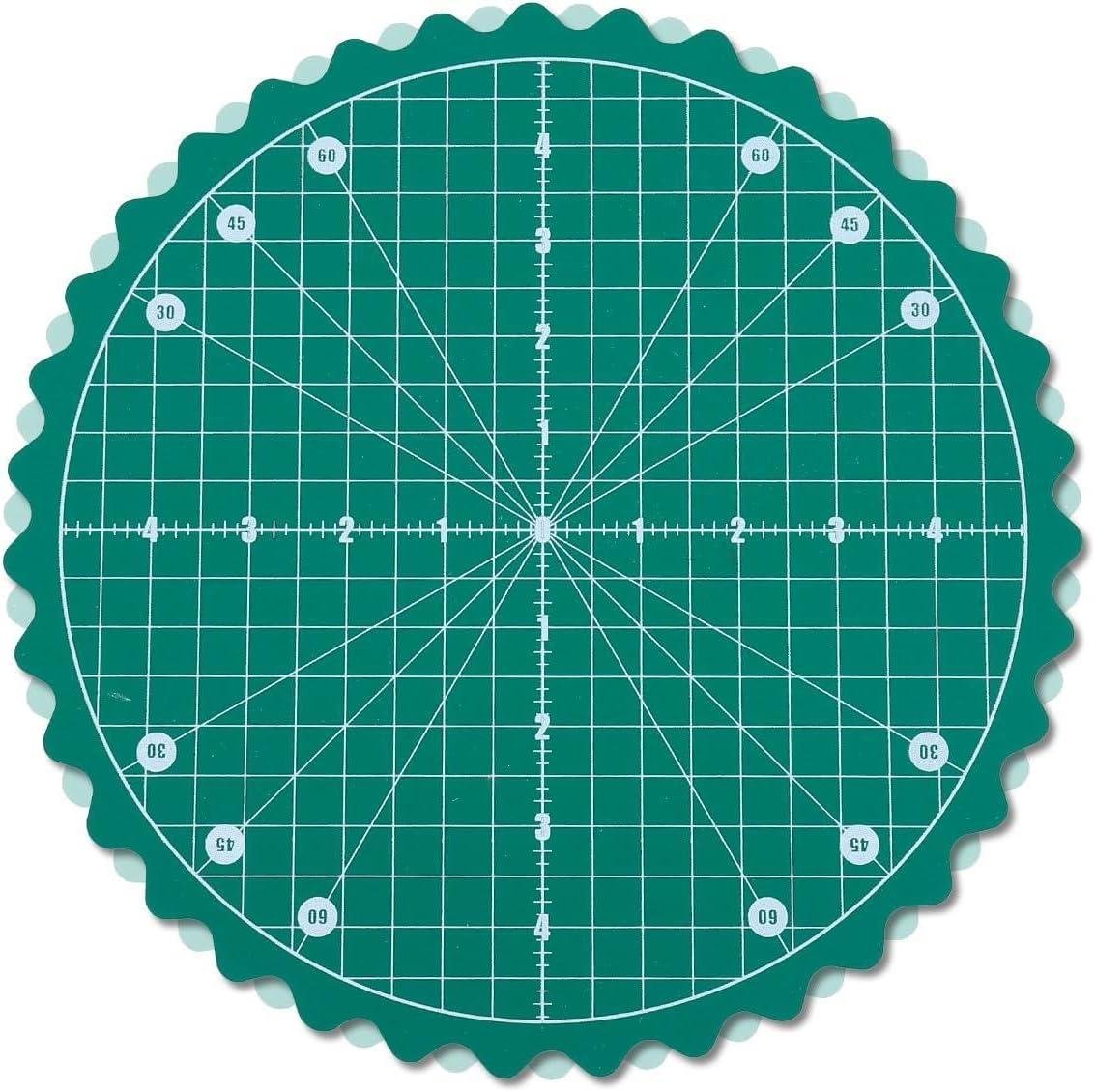
In our shop, setup is about keeping the bench clear and the layout predictable, and this 10″ round self-healing cutting mat lands in the “grab-and-go” category. At roughly a 10-inch diameter with a deep green surface and high-contrast white grid plus 30°, 45°, and 60° angle lines, it’s easy to drop next to a small-parts station for trimming veneer, gasket material, sandpaper sheets, leather strops, or template film—jobs where we want a clean cut without chewing up a benchtop. The brand calls out a PVC self-healing surface and specifically notes the mat needs “rest” to recover, which matches good workshop habits: we rotate where we cut (even if we’re not rotating the mat), avoid repeated passes in the same groove, and use a sharp knife so we don’t crush fibers or force the blade. Storage is straightforward: the compact size makes it easy to slide into a cabinet, hang in a tool tote, or keep in a drawer with layout tools—handy when we’re doing quick trim work on-site or at an assembly table.
Value-for-money depends on which feature we’re buying it for. As a cutting surface, multiple reviewers echo that the mat “works well and feels sturdy,” that the surface is “smooth and cutting does not damage the surface,” and that cuts leave no marks—exactly what we want for light-duty knife work around woodworking projects. But the “rotating” aspect is where reviews split sharply: several customers report it “doesn’t rotate,”“binds,” or requires lifting the edge, and one reviewer called out the base as a “thin piece of plastic” with about 3mm thickness and noted it was “NOT non-slip as advertised” in their setup. The product’s own note even cautions that “this mat cannot be rotated”,so for us it pencils out best as an auxiliary small trimming mat rather than a true rotating platform. If our work depends on spinning the surface for repeatable angled cuts (think marquetry packets or inlay tape patterns), we’d budget for a proven rotating mat; if we simply need a compact, marked, self-healing pad for careful knife work, the price makes more sense.
See Full Specifications & Customer Photos
Customer Reviews Analysis
What Woodworkers Are saying
1. Overall sentiment from woodworking customers
Several woodworkers (and other hands-on users) described the mat as a solid small cutting surface with useful printed guides, but sentiment turns sharply negative around the “rotating / non-slip base”, which multiple reviews say doesn’t work as advertised. Overall: good as a stationary mat, disappointing if you need reliable rotation.
2. Performance feedback (accuracy, power, results)
Precision & layout: Multiple reviews highlight that the markings and angle guides are the standout feature for accurate trimming and repeatable cuts—helpful for anyone doing small parts, angled layouts, or template work.
Cutting results / surface performance: Common praise includes the surface being smooth and resisting visible cut damage, with one user noting cutting “leave[s] no marks or cuts.” Woodworkers who use knives for tasks like veneer, laminate, gasket material, or stencil/template trimming would likely relate to this feedback.
One reviewer called it “great… [for] small, precise pieces,” especially at non-90° angles.
3. Build quality and durability observations
Mat itself: Reviewers generally describe the mat as good quality and sturdy-feeling, with the self-healing surface holding up well in early use.
Base assembly: Some users reported challenges with the base feeling cheap and thin, described as “a thin piece of plastic with an even thinner piece of foam,” and measured around 3mm thick. Multiple reviews highlight fitment issues where the mat doesn’t stay seated well in the base’s center opening, which contributes to dragging and poor rotation.
4. Ease of use for different skill levels
Beginners / casual DIYers: Reviewers with less specialized needs found it straightforward as a normal cutting mat—set it down, use the grid/angles, and cut.
More experienced/precision users: Experienced users expecting a smooth rotating action (for repeatable angled cuts without repositioning work) noted the rotation is not intuitive and sometimes requires lifting the edge to get movement—undercutting the main convenience feature.
5. Common project types and success stories
Customers successfully used this for:
- small trimming and fitting work (one reviewer called it “Perfect for small trimming”)
- Angled piece cutting for craft-style tasks (useful for anyone doing templates, small parts, or corner/angle layouts)
- On-site trimming for installed graphics where quick alignment using the printed spacing/angles mattered
While not woodworking-specific reviews, these map well to shop tasks like trimming thin sheet goods, laminates, paper/card templates, leather, or router-template patterns where a compact, gridded mat helps keep cuts consistent.
6. Issues or limitations reported
Multiple reviews highlight the same core drawbacks:
- Rotation mechanism binds or doesn’t rotate: “It doesn’t rotate easily,” “binds,” or “doesn’t rotate… as advertised.”
- Non-slip claim questioned: Some users reported the assembly drags and moves during attempted rotation; “So NOT non-slip as advertised.”
- Base fit and center opening problems: The mat may not stay centered in the base, making rotation unreliable.
- Workaround behavior: Some reviewers said it only “rotates” if you turn the entire unit, defeating the purpose—leading several to use it as a stationary mat instead.
| Aspect | Common Feedback |
|---|---|
| Performance | Smooth surface; cuts don’t visibly damage it; markings/angles help accurate trimming |
| Precision | Angle guides praised for small, precise pieces and non-90° layouts |
| Durability | Mat surface seems sturdy; base described as thin/cheap by several users |
| Ease of Use | Easy as a stationary mat; rotating feature frequently enough requires effort or doesn’t work |
| Versatility | Used for quilting/crafts and on-site trimming; adaptable to template and light trimming tasks |
| Limitations | Rotation binding, poor non-slip performance, base fit issues |
Pros & Cons
Pros & Cons
When we look at a small cutting mat like this, we’re really judging two things: how well it protects our blades and table during precision work, and whether the “extras” (non-slip base, scalloped edge, rotation idea) actually make our workflow smoother. Here’s where this 10″ self-healing mat shines—and where it stumbles.
Pros
- Small-shop friendly size (10″) — We like it for trimming small units, squaring up tiny pieces, or quick cuts without clearing the whole cutting table.
- Self-healing surface holds up well — The PVC cutting surface is designed to “close up” after cuts, so it stays cleaner-looking and more usable over time (provided that we don’t keep slicing the exact same spot).
- high-contrast grid and angles — The deep green background with white grid lines and 30° / 45° / 60° markings makes angled cuts and alignment easier when we’re moving fast.
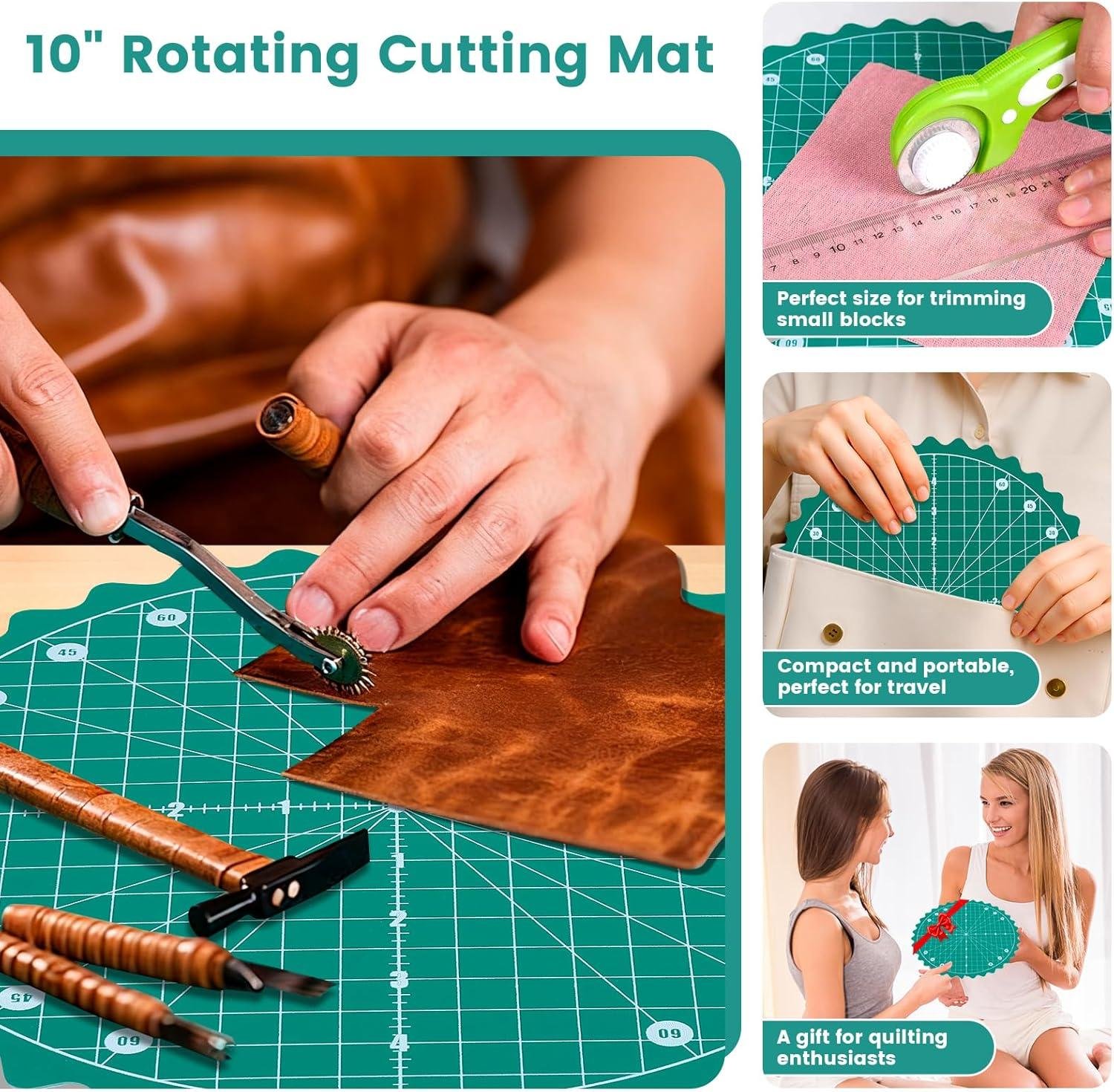
- Portable and easy to tuck away — This is the kind of mat we’d actually throw in a project bag for travel classes,client work,or craft nights.
- Scalloped edge is a nice touch — Even if rotation isn’t perfect, the scallops give our fingers something to grip, especially when repositioning the mat.
- Solid as a stationary mat — Several reviewers note the surface itself feels sturdy and cuts don’t visibly damage it much, which is the core job.
Cons
- The rotation feature is unreliable — Multiple reviews (including Vine reviewers) report binding, dragging, or needing to lift the edge to rotate. In practice, we should treat it as mostly stationary.
- “Non-slip base” may not match expectations — Some users describe the base as thin and prone to moving during attempted rotation, which defeats the purpose if we’re trying to keep alignment tight.
- Advertising vs. reality mismatch — The product info itself includes a caution that it cannot be rotated, which is confusing given the rotating-mat concept. We’d want absolute clarity before buying for shop use.
- Recovery time is real — Like many self-healing mats, it needs “rest.” If we run production-style repetitive cuts in one spot,wear will show sooner.
- Not for big pattern work — The 10″ footprint is convenient, but it’s not our choice for cutting full quilt pieces, long strips, or large leather panels.
Quick Take (How We’d Use It)
| Task in Our Shop | How This Mat Fits | Confidence Level |
|---|---|---|
| Trimming small fabric pieces / patchwork units | Great as a compact, precise surface | High |
| Angle cuts (30°/45°/60°) | Helpful markings, good visibility | High |
| On-the-go craft kit / travel mat | Lightweight and easy to pack | High |
| rotating while cutting (no hand repositioning) | Rotation may bind or drag; we shouldn’t rely on it | Low |
Our bottom line for this section: we’d recommend it as a small, accurate, self-healing cutting surface—but we wouldn’t buy it for the rotating feature. If rotation is essential to our workflow, we’d keep shopping.
Q&A
Will this work for cutting wood veneer, thin balsa, or cork-backed sheet goods?
Yes—for light-duty knife work. This is a 10″ self-healing PVC cutting mat meant to protect your bench when you’re trimming thin veneers, balsa/basswood sheets, cork, gasket material, paper templates, and laminates with a utility knife or hobby knife. The self-healing surface helps reduce visible cut lines, and reviewers commonly say the surface itself feels sturdy and “works well” for trimming. It’s not intended for saw cuts, chisels, planing, or routing.
Is it “non-slip” enough for aggressive knife cuts, or will it scoot around?
Mixed results. The product claims an anti-slip sponge base (PVC+EVC), but multiple reviews report the base can drag or move when you try to use the rotating stand, and one reviewer described the base as a thin plastic disc with thin foam that didn’t grip well.for woodworking-style knife pressure, it’s best to treat it as light-duty non-slip and, if needed, add a router-mat, shelf liner, double-sided tape, or clamp the base to your bench for more stability.
Does the rotating feature actually work (like a real turntable mat)?
Don’t buy it for rotation. Even the listing’s “Vital Details” notes this mat cannot be rotated, and several customers (including Vine reviewers) say it binds, drags, or won’t rotate without moving the whole assembly. A few users mention they can rotate it only by lifting the edge slightly. Most woodworkers will be happier using it as a stationary trimming mat and turning their workpiece by hand.
Are the markings useful for woodworking layout (angles, repeat cuts, small-part trimming)?
Yes, within its small size. The mat has a high-contrast grid and angle lines (listed as 30°, 45°, and 60°), which are handy when you’re trimming small miters on veneer, shims, inlay backing paper, edge banding offcuts, or template material. Several reviewers specifically called out the markings/angles as extremely useful for precise work.
How much setup is involved? Do I need special accessories or replacement parts?
Basically none. You place it on a flat surface and start cutting. There are no fences, calibration steps, or standard “shop tool” accessories required.If you planned to use it as a rotating mat, that’s where people run into issues—many users end up ignoring the base/rotation feature and just using the mat on the bench.
Will it fit in a small workshop, and can I take it to job sites?
Yes. At 10″ and round, it’s sized for small benches, apartment shops, and travel kits. One Vine reviewer used it for on-site graphics installation where trimming is needed, which lines up well with job-site woodworking tasks like cutting templates, sandpaper, veneer patches, or masking patterns. It won’t replace a full-size mat if you frequently cut long straightedges.
How durable is the self-healing surface for repeated knife work?
Good for normal craft/trim duty, with limits. The mat is described as self-healing PVC and the listing notes it needs “rest” to recover—so avoid repeatedly cutting the same groove (which is also good practice for any cutting mat). Reviewers commonly say cuts don’t mark it much, but very heavy pressure or constant cutting in one spot will eventually leave channels, especially with sharp utility blades.
Is this worth it vs. a bigger rectangular mat or a name-brand rotating mat?
Worth it as an inexpensive auxiliary / small-part mat; not worth it if you specifically want rotation.Reviews suggest the mat surface is decent for the price, but the “rotating/non-slip base” is the weak point (many say it doesn’t rotate). If you need a true turntable action for repetitive angled trimming, you’ll likely be happier saving up for a proven rotating mat (several reviewers compare it unfavorably to better-rotating name-brand options) or buying a larger standard mat if your main goal is straight cutting capacity.
Transform Your World

This 10″ round self-healing cutting mat is a compact, travel-friendly surface made from PVC with a non-slip sponge base, a scalloped edge for grip, and clear grid/angle markings (30°, 45°, 60°) for accurate knife work. Customer feedback is consistent on two points: the cutting surface itself holds up well and “heals” from light cuts over time, but the advertised rotation feature is unreliable—several reviews report binding, dragging, or the base sliding.
Best for: hobby woodworkers and DIYers doing small layout-and-trim tasks—cutting sandpaper sheets, veneer patches, gasket material, leather, or craft templates—especially when you want angle references and a portable mat at the bench.
Consider alternatives if: you specifically need a true rotating mat, want a heavier, more rigid base for daily shop use, or cut thick, abrasive materials that will chew up lighter mats.
Final assessment: a solid small auxiliary mat with useful markings, but buy it for the self-healing surface—not the rotation.
Want to see current pricing and customer photos? View on Amazon & Read More Reviews →